
Southern Europe as a Strategic Hub for Clinical Trials in Europe
Why Spain Leads — and Why Europe Is Moving Closer to Its Model
Experience, regulatory maturity and operational excellence in clinical research
In recent years, Spain has consolidated its position as one of the leading countries for clinical trials in Europe. This leadership is not the result of isolated factors, but rather of a mature and well-balanced clinical research ecosystem that combines scientific excellence, operational capacity and a trusted regulatory environment.
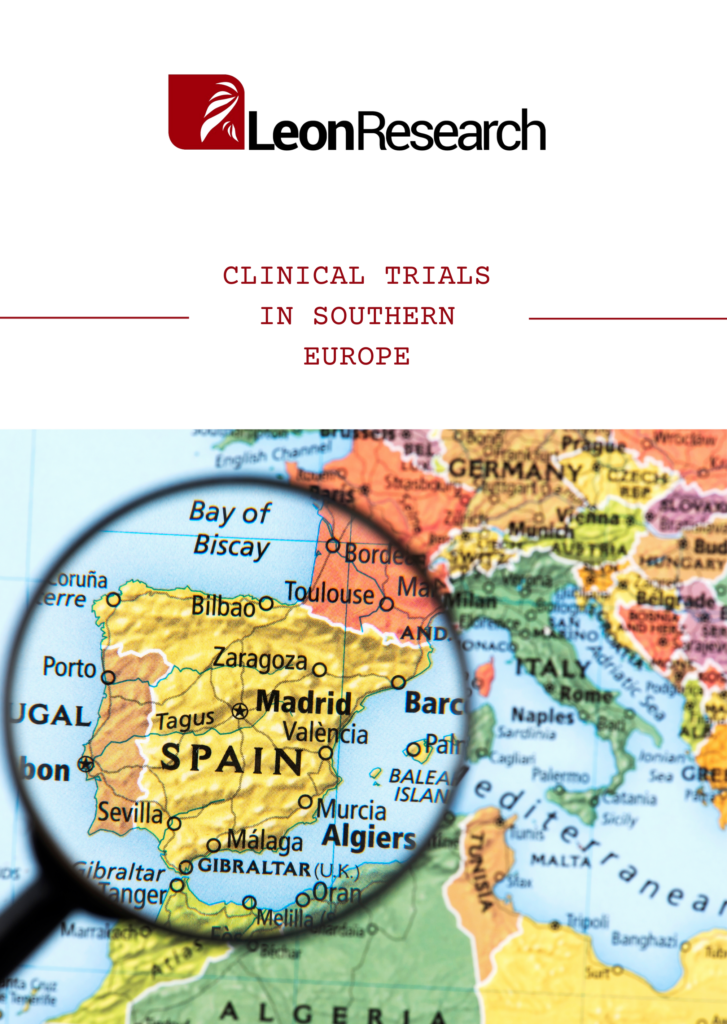
Clinical trials in Southern Europe are increasingly attracting international sponsors thanks to regulatory maturity, strong public healthcare systems and experienced clinical research networks.
As Europe advances under a unified regulatory framework through the Clinical Trials Regulation (CTR) and the Clinical Trials Information System (CTIS), an important trend is becoming increasingly evident: many European countries are actively moving closer to the Spanish model of clinical research, seeking to replicate the elements that have made Spain a reliable reference for international sponsors.
The European Clinical Research Context: One Regulation, Different Levels of Maturity
Europe today operates under a common regulatory framework for clinical trials. CTIS has introduced greater transparency, harmonisation and coordination across Member States, facilitating multinational studies and improving regulatory oversight.
However, while the regulatory structure is shared, operational maturity across Europe is not uniform.
Some countries are still adapting their internal processes, hospital engagement and investigator networks to fully leverage this framework. Others, like Spain, entered this new regulatory era with decades of accumulated experience, allowing them to respond quickly and efficiently to the demands of multinational clinical development programmes.
This difference explains why Spain continues to lead in the number of authorised clinical trials and why it plays a central role in European research strategies.
The Spanish Clinical Research Model: Key Pillars of Leadership
Spain’s position as a reference country is built on a model that integrates regulation, healthcare, research and collaboration.
1. Research Embedded in the Public Healthcare System
Clinical research in Spain is deeply integrated into the public healthcare system. Large university hospitals and regional centres actively participate in clinical trials, allowing:
- Direct access to diverse patient populations
- Investigators who combine clinical care with research activities
- Efficient identification and recruitment of eligible patients
This integration creates a natural environment for high-quality, patient-centred research.
2. A Trusted and Balanced Regulatory Authority
Spain’s regulatory authority has earned recognition across Europe for combining scientific rigour with operational efficiency. High ethical standards, patient protection and transparency coexist with realistic and predictable assessment timelines.
This perception is also reflected in official institutional communications. For example, the Spanish Agency of Medicines and Medical Devices (AEMPS) has highlighted Spain’s consolidated leadership in clinical research within Europe, reinforcing international confidence in the Spanish regulatory and research environment.
Official source: Spain consolidates its European leadership in clinical research, published by the Spanish Agency of Medicines and Medical Devices (AEMPS)
This balance is particularly valuable for sponsors conducting complex or innovative studies, where regulatory clarity and consistency are essential for planning and execution.
3. A Broad and Decentralised Network of Research Centres
Unlike systems that depend on a limited number of flagship hospitals, Spain benefits from a wide and decentralised network of research-active centres. This structure offers:
- Flexibility in site selection
- Resilience against recruitment challenges
- Scalability for large or complex trials
For international sponsors, this translates into operational confidence and continuity.
4. Strong Experience in Multinational Clinical Trials
Spain has long been a key contributor to multinational European and global trials. Investigators, hospitals and operational teams are accustomed to:
- Complex protocols
- Cross-border coordination
- Strict adherence to international quality standards
As a result, Spanish sites integrate seamlessly into multinational development strategies.
Why Other European Countries Are Moving Closer to the Spanish Model
Under the current European regulatory framework, many countries are strengthening their clinical research ecosystems. However, rather than reinventing the system, several are aligning their structures with the principles that have proven effective in Spain:
- Stronger hospital involvement in research
- Closer collaboration between regulators, healthcare systems and industry
- Expansion of investigator networks beyond a small number of centres
- Emphasis on ethics, transparency and patient engagement
Spain, in this context, functions not only as a leading country, but also as a practical reference for how a mature clinical research environment operates within Europe.
Italy: Scale and Expertise Evolving Towards a More Integrated Model
Italy represents one of Europe’s most important clinical research markets. Its healthcare system, large hospitals and highly qualified investigators provide strong foundations for clinical development.
In recent years, Italy has been advancing towards greater harmonisation and efficiency within the European framework, reinforcing:
- Coordination between centres
- Participation in multinational trials
- Alignment with CTIS processes
While Italy continues to optimise its operational structures, its trajectory increasingly resembles the Spanish approach, particularly in the integration of research within public healthcare and in its growing role in multinational programmes.
With the support of partners experienced in mature research environments, Italy offers significant scale and scientific depth for European clinical development strategies.
Portugal: A Strategic and High-Potential Clinical Research Environment
Portugal is increasingly recognised as one of Europe’s most promising clinical research environments.
Although its overall trial volume remains lower than that of larger countries, Portugal offers several strategic advantages:
- A high-quality public healthcare system
- Motivated and well-trained investigators
- Access to patient populations in a less saturated market
- Growing institutional and political interest in clinical research
Under the European regulatory framework, Portugal is rapidly strengthening its research capacity and positioning itself as a valuable contributor to multinational studies.
Rather than competing with larger markets, Portugal complements them, providing agility, recruitment efficiency and additional population diversity.
Southern Europe as a Strategic Clinical Research Hub
Together, Spain, Italy and Portugal form a coherent and increasingly strategic clinical research region within Europe.
- Spain provides leadership, regulatory maturity and extensive experience
- Italy contributes scale, specialisation and scientific expertise
- Portugal offers growth potential, agility and emerging opportunities
This combination enables sponsors to design European clinical development strategies that are both robust and efficient, optimising recruitment, operational performance and data quality.
What This Means for International Sponsors
For international sponsors, Southern Europe represents more than a geographical choice. It is a strategic opportunity to work within:
- Mature and trusted regulatory environments
- Integrated healthcare and research systems
- Experienced investigator networks
- a collaborative European framework
With the right operational partner, sponsors can leverage the strengths of each country while benefiting from a coherent and harmonised regional approach.
Conclusion
Spain’s leadership in clinical research is not only reflected in numbers, but in the structure, maturity and reliability of its entire ecosystem. As Europe continues to evolve under a unified regulatory framework, many countries are moving closer to this model.
Within this context, Italy and Portugal emerge as natural extensions of the Spanish approach, strengthening Southern Europe’s position as a key hub for clinical trials in Europe.
Clinical trials in Southern Europe represent a strategic and future-oriented choice for sponsors seeking efficiency, quality and regulatory confidence in Europe.